
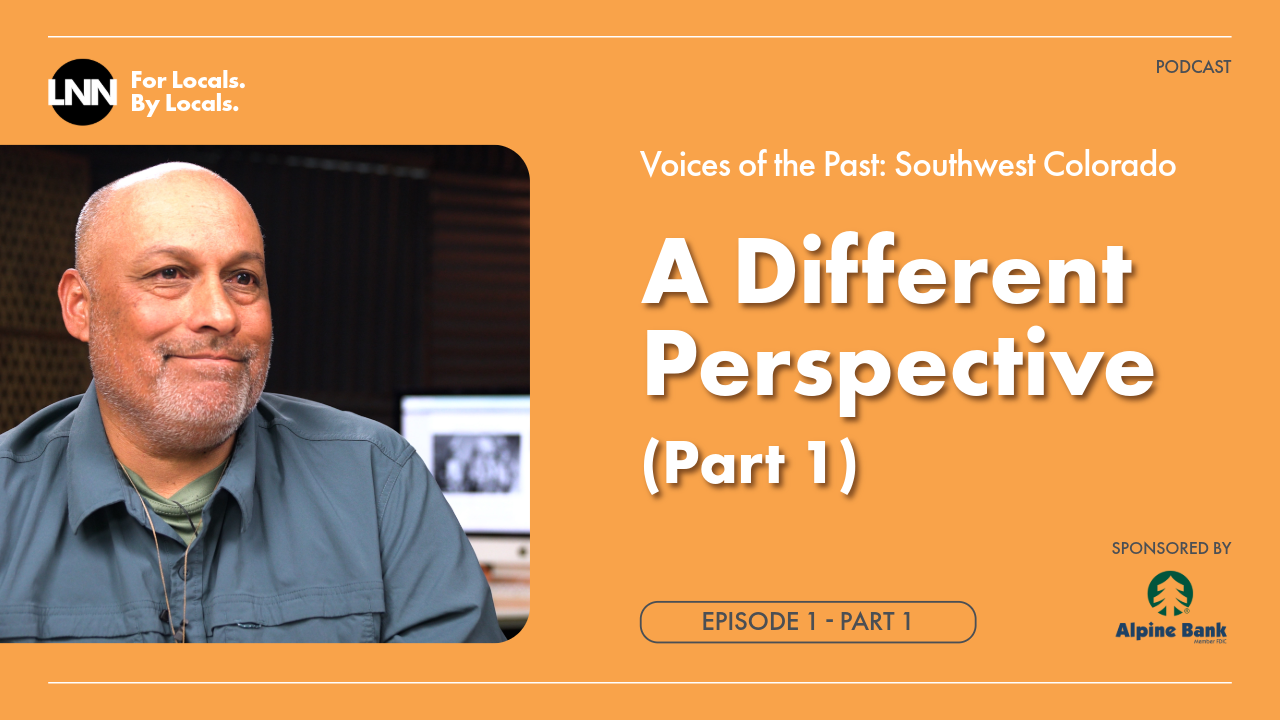
Native historian Johnny Valdez sheds light on a largely untold chapter of Colorado's history — the Brunot Agreement of 1873 and the treaties that transferred Ute ancestral lands to the United States government. Writing for the U.S. 250/Colorado 150 Power of Place Magazine, Valdez draws on both his formal education and his heritage to reveal what most Colorado schoolchildren were never taught: that the Ute people, the Nuuchiu, did not simply "give" or "sell" their land, but did so under the threat of annihilation, amid miscommunication and cultural misunderstanding. The Power of Place Magazine is a special initiative of the Colorado 150 Southwest organizing committee, featuring 20 articles by professional historians and local writers exploring Southwest Colorado's rich and complex heritage. Valdez reminds us that this land — the mountains, rivers, forests, and valleys — is sacred, and that understanding its true history makes each of us a better steward of this place. This story is sponsored by Alpine Bank, Sky Ute Casino and Strater Hotel. Watch the full series, Voices of the Past: Southwest Colorado.
When I think back to all the things I learned in school, I'm reminded how much I missed, how much I wasn't taught or simply didn't know. Some of that is my own fault and some is mystery. I took everything I was told in school as fact, and all I was told by my elders and tribal protectors is myth legend, or a story I found later in life that I would've been better served. Listening to the latter, we were taught in Colorado Public School that the Utes gave or sold the land of Colorado and neighboring states to the United States government. No teacher said it happened under the threat of Annihilation. No one spoke about the forced removal to reservations or the loss of their homeland. No one spoke to the Ute tribe's rich and storied heritage. It wasn't mentioned that they were likely the first tribe to attain the horse from the Spanish more than 400 years ago. I was told all these things by my people a long time ago, but I chose to ignore many simple truths. The original treaty of 1863 with the Ute people, the Nu, also known as the Can Kho Treaty, seeded most of the mountains of Colorado and to the United States. The Bruno agreement of 1873 ratified by Congress in 1874 occurred three years before Colorado statehood. These combined documents also preserve the rights of the EU people to their hunting crowns. Littler is known or taught about the treaty that seeded the ancestral lands of the EU people. The government's acquisition of land in the Colorado territory provided a powerful economic boost to the area's extensive natural resources. Gold and silver and other minerals had been discovered in the San Juan Mountains in the late 1850s. The land also had abundant old growth forests and a vast water supply from many of the major rivers in the west. This newly acquired region provided incredible opportunities to the newcomers of the state that the participants who signed the agreement did not understand it. During the negotiations, there was misinformation and miscommunication, and there were cultural differences about the idea of land ownership. But Colorado was more than just land. It's water, mountains, planes, valleys, they're all priceless, valuable beyond monetary worth. This incredibly beautiful place is the land of the Great Spirit. The no, it is sacred and holds a history of stewardship maintained by the Nu or the Ute. And now that stewardship belongs to you, please protect it. And remember the story that you heard here. It might not be what you learned in school, but it's the truth. To read this story, visit Colorado one 50 southwest.org. Alpine Bank committed to Colorado, and you.
.jpg)



.jpg)